
Child Health
  • GENERAL
    • ANTIBIOTICS
    • IMMUNISATION
    • NUTRITION
    • TEETH CARE IN CHILDREN
  • UNWELL CHILD
    • WHEN TO TAKE YOUR CHILD TO HOSPITAL
    • FEVER
    • FEBRILE CONVULSIONS
    • COUGH
    • ABDOMINAL PAIN
    • VOMITING
    • HEADACHE
  • ILLNESSES/CONDITIONS
    • COLDS & UPPER RESPIRATORY TRACT INFECTIONS
    • RESPIRATORY PROBLEMS
      • COUGH
      • CROUP
      • WHEEZE IN 1-5 YEAR OLDS
      • BRONCHIOLITIS
      • PNEUMONIA (CHEST INFECTION)
      • ASTHMA
    • GASTROINTESTINAL
      • VOMITING
      • GASTROENTERITIS
      • SUDDEN ABDOMINAL PAIN
      • RECURRENT ABDOMINAL PAIN IN CHILDREN
      • CONSTIPATION & ENCOPRESIS
      • COELIAC DISEASE
    • EARS & THROAT
      • MIDDLE EAR INFECTION (OTITIS MEDIA)
      • TONSILITIS AND PHARYNGITIS
      • UlLCERS, SORE THROAT AND FEVER IN TODDLERS
      • SNORING
      • SWIMMER’S EAR – OTITIS EXTERNA
    • SKIN
      • ECZEMA, CAUSES, TREATMENT & ADVICE
      • URTICARIA AND HIVES IN CHILDREN
      • WARTS
      • MOLLUSCUM CONTAGIOSUM
      • VIRAL RASHES
      • IMPETIGO OR SCHOOL SORES
    • GENITOURINARY
      • ‘ITCHY UNCOMFORTABLE GENITAL REGION’
      • URINARY INFECTION
      • BED WETTING
    • CENTRAL NERVOUS SYSTEM
      • FEBRILE CONVULSIONS
      • HEADACHE
  • INFANT
    • ADVICE TO NEW PARENTS
    • GUIDELINES TO INTRODUCING SOLIDS IN INFANTS
    • INFANT FEEDING PROBLEMS
    • HELP WITH INFANT SLEEP
    • IRRITABLE INFANT
  • MENTAL HEALTH
    • AUTISTIC SPECTRUM DISORDER
    • ANXIETY DISORDERS
    • ATTENTION DEFICIT DISORDER
    • BEHAVIOUR AND PARENTING
      • MANAGING THE TODDLER AND SMALL CHILD
      • OLDER CHILD & ADOLESCENT
      • GUIDELINES FOR ONLINE BEHAVIOUR – AAP
  • ALLERGIES
    • ECZEMA
    • ASTHMA
    • DUST MITE ALLERGY
    • FOOD ALLERGY
    • ALLERGIC RHINITIS
    • SUBLINGUAL IMMUNOTHERAPY
  • HEALTH PROFESSIONALS
    • Useful Paediatric Resources
  • Click to open the search input field Click to open the search input field Search
  • Menu Menu
You are here: Home1 / Skin2 / Molluscum Contagiosum
Skin

Molluscum Contagiosum
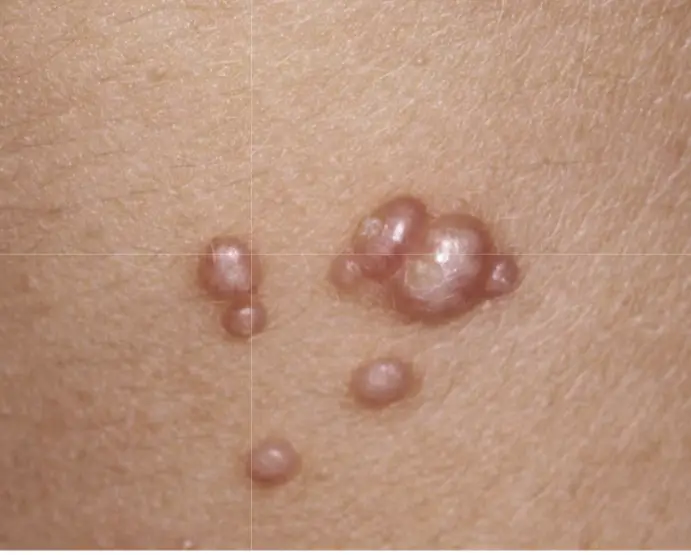
 Molluscum Contagiosum is a common, small dome shaped skin lesion that is caused by a virus. Often no treatment is necessary and they will pass with time. However in some children, particularly those with eczema it can be problematic. Treatment can be difficult though.

Screenshot 2016-06-09 20.22.57What are Molluscum Contagiosum ? 

They look like small pimples initially before becoming pearl coloured raised bumps. In most instances there are about half a dozen spots, and they usually appear on the nappy area, tummy, face, arms and legs. But in some children there can be a large number, particularly if there is a history of eczema. They are slightly itchy at times. They are caused by a virus which is found in humans only.

How do you catch Molluscum Contagiosum?

Most commonly it is spread between family members when using a bath. It is also found in public swimming pools and lives for a while on towels, face cloths and bath toys. It can take weeks to months for the spots to appear after your child has had contact with the molluscum virus. They can be spread by touching the molluscum and scratching elsewhere.

When Should Molluscum be treated ?

In many cases there is no need for any treatment as they are harmless, will disappear and there is no scarring. However in certain circumstances treatment is definitely required

  • Those children who have eczema and hence a large number of lesions
  • If they become infected from scratching
  • When they are causing distress, for example when on the face
  • When there are a large number of lesions

What is the treatment ?

The goal of treatment is to irritate the lesions, which results in the body discovering the virus and the immune system eliminating it.  There are a number of physical and chemical irritants which can do this. Note that aggressive treatment can lead to scarring.

  • Occlusive tape – duct tape. Apply over the molluscum and leave for 48 hours then remove. May need several treatments
  • Acne medication Benzac gel and then covered with tape is more effective
  • Medicated creams available only from dermatologists are also effective when molluscum is particularly bad.
  • Infected molluscum will need an antibiotic ointment such as bactroban to eliminate the bacteria
  • The good news is that often only a few lesions need to be treated and the others will disappear by themselves.

How do you prevent the spread of the virus ?

To avoid spreading the virus the following will help

  • Try to use showers instead of baths
  • Clean bath toys after every bath
  • Do not share towels and face cloths.
  • Dry infected areas last.

There are no reasons to be excluded from school or daycare due to molluscum.

 

Print Friendly, PDF & Email
June 9, 2016/by scott
Share this entry
  • Share on Facebook
  • Share on X
  • Share by Mail
https://childhealth.com.au/wp-content/uploads/2016/06/Screenshot-2016-06-09-20.22.57.png 555 691 scott http://childhealth.com.au/wp-content/uploads/2013/11/childhealthlogo.png scott2016-06-09 21:28:312024-02-16 14:41:29Molluscum Contagiosum

Categories

Dr Scott Parsons

The author, has worked as a general practitioner with a special interest in paediatrics for the last 20 years. He has developed this website in order to help parents with the task of raising children. He currently works in Adelaide at Total GP Care Norwood and Priorty Paediatrics

Affiliations

The website content is based on evidenced based guidelines. There are no commercial affiliations.

Child Health © 2014. All Rights Reserved.
  • Privacy Policy and Disclaimer
Link to: The problem with too much milk. Link to: The problem with too much milk. The problem with too much milk. Link to: Teeth care in children Link to: Teeth care in children Teeth care in children
Scroll to top Scroll to top Scroll to top